Showing posts with label Green. Show all posts

Saturday, March 3, 2012

Premium Grade Dragonwell

Compliments to Teavivre for this next sample.

Usually I pay no mind to the grade of the tea, especially a Long Jing. I have really no idea what the word premium is supposed to contribute to the tea, but apparently its important. Personally, I think it is a marketing scheme. The taste is all about the leaves, not the fancy words and lovely descriptions. Its about pure, raw taste.

Again, as with all the teas they have sent, there is detailed information about the tea and where it comes from etc..

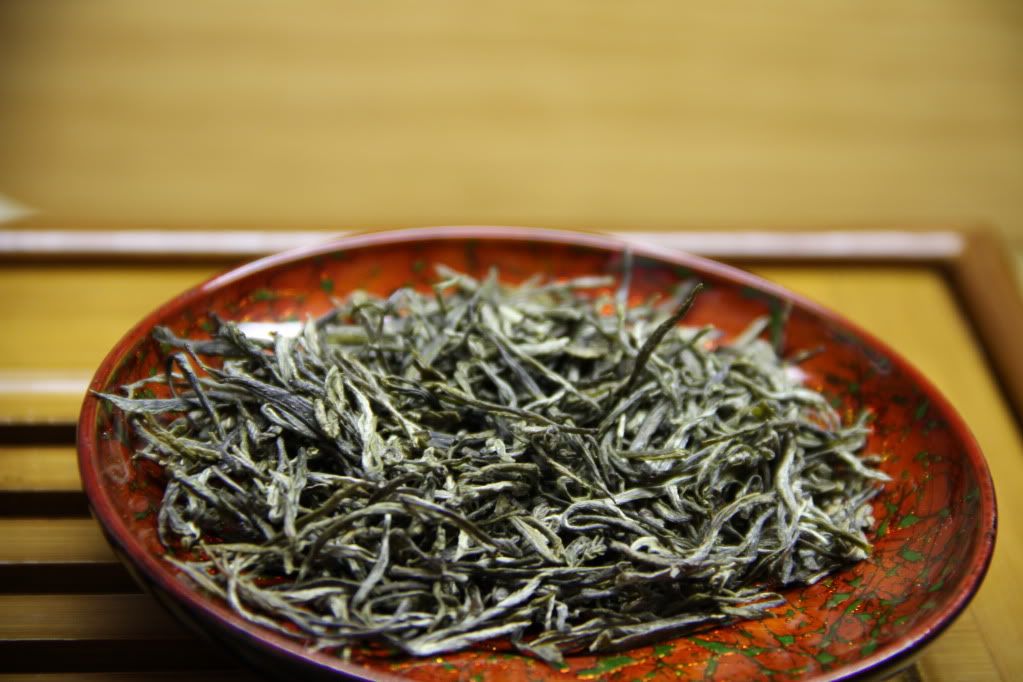
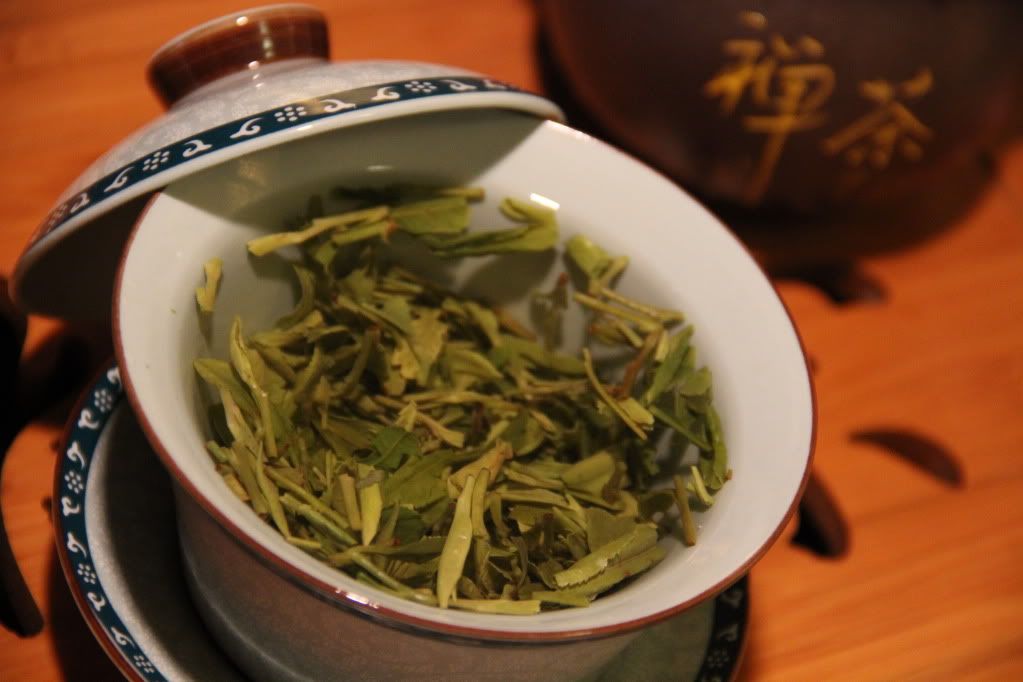
The dry leaf beautiful.
It smells fantastic! It has a sweet, nutty smell as its base with some grassy/hay notes to round it out. To top it off, it smells sort of how I would imagine the wok would smell when the leaves were put into it.
It is a tea from last year, but the storage has been great. It smells quite fresh and looks just the same!


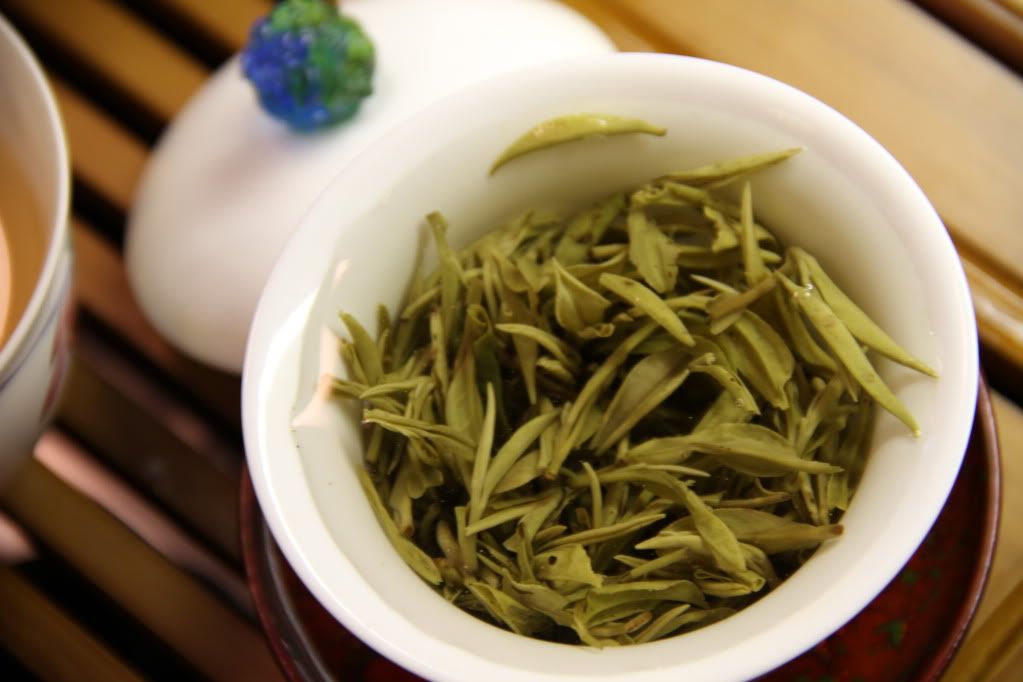
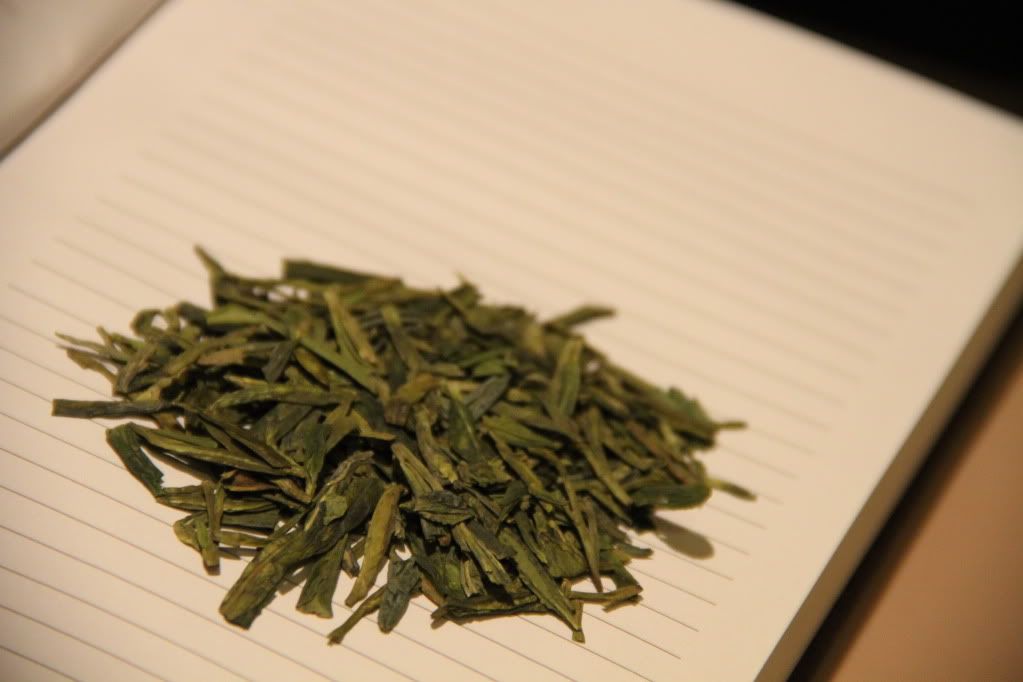
As you can see above, the leaves look great! They look as though they have been handled by hands. They are uneven in both shape and color, and honestly they are even more vibrant green than the picture shows. This is truly (in my humble opinion) one of the best dragonwell teas I have seen, even if it is not the prettiest. It has a rawness and rugged look that really sets it apart!


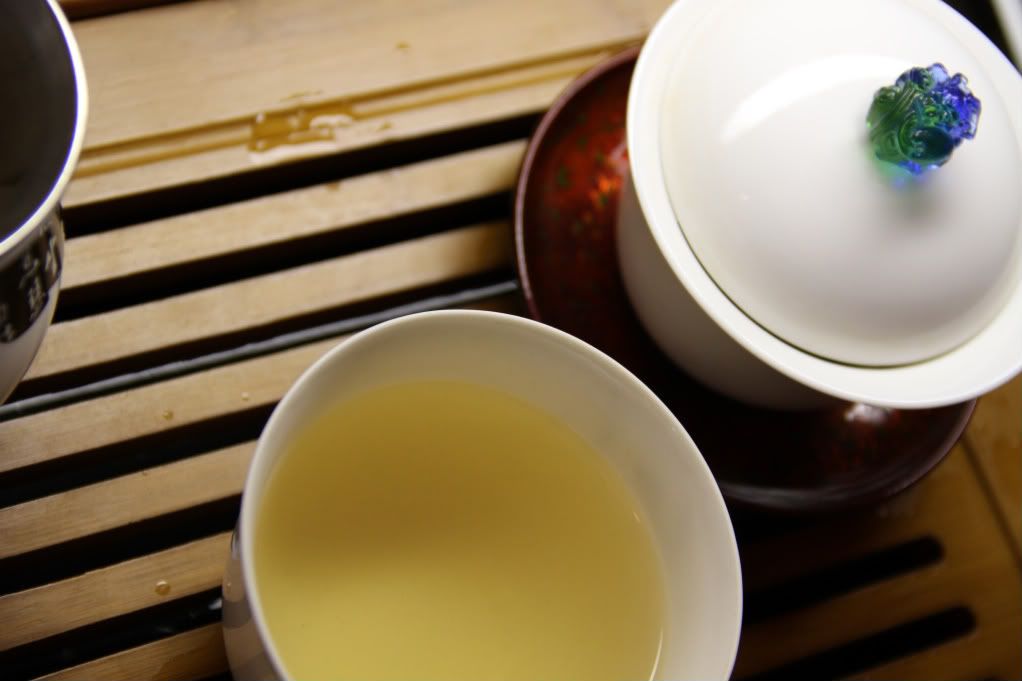
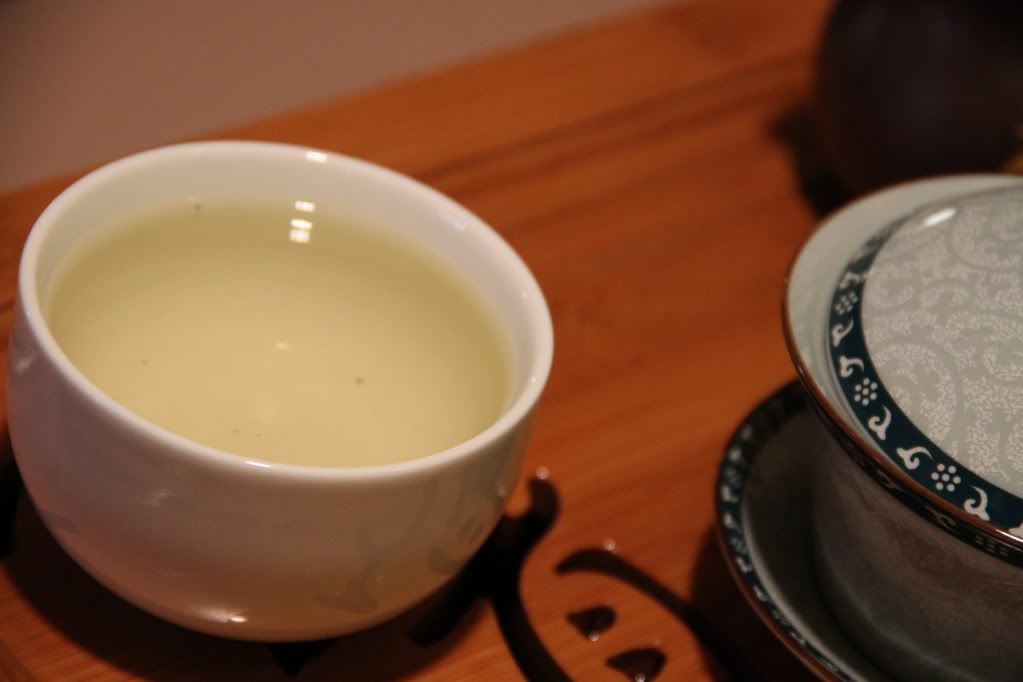
The liquor smells like fresh grass and roasted chestnuts. The smell of a good dragonwell is hard to beat in the world of Chinese green tea.

The taste is perfectly balanced.

Sweet corn, chestnuts, fresh grass clippings (actually much more appetizing than they sound).
Everything about this tea has clicked with me.
I literally have no complaints.
When I have money (college really can make someone quite poor) I will most likely be ordering more of this tea, or hopefully a 2012 crop.

Thank you for the experience, Teavivre.

~billy

Tuesday, July 26, 2011

Xi Hu Long Jing

Fresh (well, relatively) Long Jing.
I have not had a good Dragonwell in quite some time.
Browsing through the selection at Norbu Tea while shopping for the Shade-Grown TGY, this tea caught my eye.

It is a good summer tea.

The dry leaves look stunning, boldly displaying their green color, while yet maintaining a humble demeanor.
The aromas coming off the leaves are of pine nuts, roasted greens, and fresh cut wood.

I prefer my dragonwells to be a bit on the more roasted side, but this tea has a good balance of both a roast, and a vegetal smell.

I brewed this tea in a manner similar to how Gingko prepares all her green teas; glass cup.
This method is a bit unfamiliar to me, but it turned out to be simple, and effective at producing good results time and time again.

This tea is clean.
Roasted corn and a mild sweetness fill my mouth upon entrance of the liquor.
There is a perfect balance of astringency and sweetness. It is a satisfying drink.

The aftertaste is cooling, fresh and vegetal, and is very crisp in texture.

The leaves are gorgeous brewed as well. The quality is apparent, and I am not in the least bit disappointed.

This tea gave me the opportunity to slow down, relax, and unwind my nerves, which happened to be quite frustrated at the time...
Simple, difficult to mess up, good quality, decent price...
All good signs.
Thank you Greg!


~billy

Sunday, April 24, 2011

TongCheng Small Orchid

Another day of spring, another green consumed.
This tea is, again, from the much respected Gingko.

The vessel is a piece by Petr Novak, which I will introduce in a later post.

This tea is a great looking, family made product. The lack of uniformity makes this tea special, and gives it a personal touch.

Smelling the dry leaf brings to mind bamboo shoots, cream and cucumbers. There is no evidence of roasting, which gives this tea a very fresh, clean scent to it.

A submersion in cool water draws out the wonderful gift this tea has to offer.
The liquor is sweet and delectable.
Cucumber, grass and fresh mint come to mind when the first cup is consumed.
The light rain outside the window calms me, and the tea warms me.

This light, delicate tea is very fresh and clean, and truly tastes young. The small shoots used in production can attest to that.

A cooling menthol coats my throat.

I consume several more cups, with each infusion bringing out other subtle notes to capture and relish.

The large amount of leaf I used did not give off any astringency whatsoever.
This tea was well made, and is easy to brew.

Greens are never too much to handle, and never have one stumbling to find descriptors. Each one has its own simple medley of tastes and aromas.

The experience in tasting this fine tea was much improved when sipped out of the handmade cups from Petr. The roughness of one cup and the contrasting glossy smooth surface of the other compliment each other and give a different experience of the tea.

Happy Easter to all; He is risen.
He>I


~billy

Tuesday, April 12, 2011

Orchid Fairy Twig

Now that spring weather has come upon the mid-west, it is time to break into the green teas.

This is a sample from none other than the great green tea aficionado, Gingko (read her review here as well).

Flowers, hay, sweet grass and a mixture of light fruity notes are immediately recognized as the package is opened.
The leaves look very natural and have a good color and texture. The quality is apparent. The leaves are examined, appreciated and then put in the warm gaiwan.

As the water is poured over the leaf for the first infusion, the sweet grass note is accentuated in the aroma. Mint and rosemary accompany it.
Even as this sample is a bit old, it is still quite pungent and fresh.

The liquor has a bold mouthfeel. It is heavy, cooling and smooth.
Light mango and grass flavors are tasted, pondered upon, and then dissipated, making way for chestnuts to leave their toasted flavor; a reminder of the intense care and dedication needed to produce such a tea.
The flavor is fitting for the weather, as the sunlight is illuminating the beautiful scene out my window.

Green bean flavors appear in the latter infusions. On the whole, this tea is mellow, smooth and perfectly astringent.
In some respect, this tea reminds me of a green I had last year.

Spring is fresh and clean, and this tea represents those qualities.
The spent leaves, being suspended by the water, are beautiful.

The scene in the cup matches the mood of the season.


~billy

Tuesday, January 25, 2011

Silky Green (... Milk Oolong?)

I have been frightfully busy, and have an ever growing pile of teas to review. It is not exactly the best combination.
But either way, I will compose reviews when possible!
This is a part of my collection of samples from Bird Pick.
They say this is a "Silky Green Tea," from Taiwan.

I say it is a Milk Oolong tea, perhaps.

Creamy, sweet, buttermilk-y, and squash notes float up from the dry leaf. I do not have faith in this tea as far as it being an authentic milk oolong. I have had only one milk oolong I knew to be the real deal, so I judge milk oolongs off of that experience.

This tea was put to the test. I used a limited amount of leaf, brewed in a large pot with boiling water.
Extraction of every component in this tea was necessary for the rigorous test.

The aroma was not surprising;
milk, cream, and an aroma not unlike that of warm cooking oil. This liquor is going to be saturated with sweetness.

I was correct.
The texture is very oily, creamy and buttery. The sweetness is very prevalent and coats the mouth.
One thing that did surprise me was that I could still taste tea. Now, mind you, it was not green tea I tasted; it was oolong. The tea looks like it has been processed in the fashion of other oolongs, and there is oxidation on the edges of the leaves. I would think this is a fairly persuasive characteristic. Also, the liquor was absent of astringency, which is not uncommon for an oolong, but is very uncommon for a green tea made in fully boiling water.

Also, looking at the liquor as it was infusing, I noticed small white flecks mingling among the dancing leaves. It was not down, they were flecks.
My guess; partially soluble material, such as a flavoring or a powder.

With all these clues, I am still not sure whether this tea is an authentic milk oolong, or if it really is a green tea that has undergone different processing.
I enjoyed analyzing this tea.
Whether or not it is a true "Milk" oolong, I am not sure.

What do you all think?


~billy

Saturday, January 1, 2011

Supreme Organic Dragon Well

Happy New Year to each and every one of you dedicated (or first time) readers of this blog. I find that with the coming of the new year, more than likely, people construct resolutions. To all those of you who participated in this tradition, good luck to you. For all those who were uninterested or just a bit lackluster, I concur. The only thought I had was, “Find and drink better tea,” but I realized that action has been ongoing since I first fell into my passionate interest for the leaf. So be it.

This tea that the new year has been brought in with is an offering from Bird Pick. It has been sitting in my “To review” pile for a while. I had been too busy with holiday festivities, socialization, and relaxation to consume my ever growing collection and append the entire process in the written and captured fashion.


I have also been taking advantage of the opportunity to fulfill another of my hobbies while I have the chance.

In Indiana, there is no place close to what is in New Mexico. I can honestly say, I am a desert rat at heart.

This is a Supreme Organic Dragon Well green tea.

The dry leaf exhibits chestnuts (only they were not, at the time “roasting on an open fire”), fresh spinach and dry vegetation, of course referring to some form of dry, piled leaves, various twigs, and a bit of hay perhaps.

The water is cooled to the appropriate temperature and the brewing process begins.

The aroma of the liquor is heavily laden with sweet grass. Floral tones and pears are barely sensed.

Once upon the palate, green apples and grass begin the flavor profile. A very light roast finishes off the taste, and leaves behind a delicate astringency. Given time, though, the astringency becomes very powerful. Before my next batch is prepared, my mouth cannot even salivate.

This is one of the most sensitive Dragon Wells I have ever encountered. It is overly persnickety in every aspect. It took me a few tries to understand the correct method to brewing of this tea.

One of the characteristics I enjoy about this tea is that as the tea is brewed more and more, the flavor becomes sweeter. I have not had many teas that possess this quality, but I enjoy and appreciate it.

Thank you to Bird Pick, and again, a Happy New Year to all!


~billy

Thursday, August 12, 2010

Huang Shan Hair Tip

This is another offering from Arbor Teas.

My first experience with a Huang Shan Mao Feng was a less than positive experience.
I bought a sample pack from a company I will not mention. It was a pack of the Top Ten Famous Teas from China.
This was one of the teas included in this pack.
I was just venturing into the tea world at the time and I had only read a few books and experimented with a few teas.
When I brewed this tea, I found it to be much to earthy, a bit bitter, and almost smokey.
I do not remember if this was due to my lack of brewing capabilities, or to the fact that this may have not been a very well prepared tea.
In either case, I was cautious whenever I ran across a tea like such.
This tea has changed my mind quite a bit.

The dry leaf emitted the aromas of almond, pine and cocoa.
Almond and pine were somewhat expected. Cocoa threw me a curve.

The infusion;
from the cup, there was a light aroma. There was a floral aspect to it; lavender.

Nutty aspects paired well with woodsy evergreen.
A fresh, well balanced astringency took hold of my mouth.
Captivating.

The liquor left me with a sweet and sour, green apple trait.

The infusions were drawn out much past my expectancy.

Hay became a pronounced flavor in the latter infusions.

To end the session; smooth butter.
A great finale to a somewhat simplistic tea.

This tea treated me to a wonderful session; a getaway.


~billy

Wednesday, August 11, 2010

Emerald Spring Lung Ching

Arbor Teas was gracious to send me a few samples.
One thing this company does that stands out against the rest; they go green.
This is a company driven by the idea of sustainability of agricultural products.
Their teas are all organic certified, their packaging is compostable (a clever idea) and a large selection of their tea is produced under the FairTrade label, which I believe to be beneficial to those who profit by it; the farmers. This is a touchy subject amongst the tea world though, so I shall move on.

The first tea being reviewed out of the set is their Lung Ching.

Dry leaf;
dominantly toasted notes, along with walnut and alfalfa aromas. The pan firing process sure imparted its scent into these leaves.

The liquor was lacking in aroma. All I could pick out was the toasted scent.
Sweet walnut comes through as the opening flavor of this tea.
A cooling basil taste follows, which leaves my mouth feeling quite refreshed.
The finish is of a very delicate toast, which I find surprising due to the pungency of this specific attribute in the dry leaf.

There was not much astringency to be found.

Following infusions display lemongrass and a light resemblance to basil, still.
The toast is definitely on the decline as well.

One aspect I did enjoy in the latter cups was the more potent astringency.
I enjoy a dragonwell with a bit more of a bite. Not bitter, mind you, but just enough astringency to leave a lasting impression.

This tea overall was not the best dragonwell I have tried.
I enjoyed it on the whole, but probably wouldn't order it.
The flavor profile was in line with the "classic" dragonwell profile, but this was not a shining star.
If I wanted to introduce someone to the vast assortment of green teas, this would be a tea I might use.

Another thing that did surprise me about this tea was this curious leaf.
Lung Ching teas normally have a plucking standard of "one leaf and a bud."
It was a bit of a random stumble to find a set of "two leaves and a bud."
This has nothing to do with the quality of this tea, it just seems that someone missed the extra leaf as it passed on through the stages of processing.

A thank you to Arbor Teas for this sample.


~billy

Wednesday, August 4, 2010

Pure Twig Kukicha

I have had Kukicha before, but not pure twigs.
This tea was bought at a local store that specializes in health foods, foreign foods, and all natural products.
The Japanese waste nothing, and so what better to do than make an infusion out of the twigs collected by the mechanical harvesting.

The dry leaf, or rather twig, smells heavily of walnut, caramel, and fired oak.
In essence, it is another form of a houjicha.
This is definitely a roasted creation.

In brewing this tea, I filled the petite kyusu about 1/3 full of leaf.
I made this method as an adaptation of the chao zhou method.
Espresso method, if you will. My intent was to pull as much flavor as possible out of the dark stems

Once the water was poured in, a strong scent of cocoa rose out of the pot.

For how dark the infusion was, there was not as bold of a flavor as I thought there would be.
The liquor conjured up a multitude of flavors to try to describe;
Maple, chocolate, vanilla, toast, oak, and a bit of brown sugar.
The sweetness reminded me of an aged oolong.

The texture was unbelievably smooth and had only the slightest detectable astringency.

The second infusion only brought out a bit of cherry on the palate, but maintained quite the same profile.

This tea is quite an easy drinker.
I would not necessarily spend much time with this tea, as it is not so complex.
It is on the opposite spectrum as teas such as This.

My recommended settings for this tea;
cold night, blanketed, sitting by the fire with family and friends.


~billy

Tuesday, August 3, 2010

Liu An Gua Pian

In addition to the TaiPing HouKui I bought from JK Tea Shop, I also bought a sample of their LiuAn GuaPian.

This tea is supposed to be shaped like a melon seed, as its translated name suggests.
Personally, I cannot see the resemblance.

The tea is quite a vibrant green, and probably one of my favorite shades of the lovely color.
Visually, this tea is very appealing. The leaves are in uniform shape and size for the most part, and one can tell that time and effort went into producing this tea.

The aroma of the dry leaf hinted a vegetal sweetness, not quite unlike the TaiPing HouKui.
A creamy scent arose from the package as well.

Lime is present in the liquor. A cold menthol (mint, camphor, cooling) feeling was present as the tea made its way down.
The vegetal sweetness in the aroma had morphed into more of a string bean type vegetal in the liquor.
The astringency had quite a presence on the tongue and on the sides of the mouth, although this could have been part of the cooling feel aforementioned.


The second infusion was disappointing.
My notes read; "Tastes...fake. Bean flavor still present."

I do not know how to accurately describe how a tea would taste "fake," but that is what I felt.
I believe this mostly to be an operator error on my part, because the third infusion was much better after a tweaking in brewing parameters.

3rd infusion;
beautiful tart, vegetal sweetness.
I felt that the third infusion was well balanced in terms of how the flavors should be matched and the levels at which they should present themselves on the palate.

Much enjoyed for several more infusions.


~billy

Friday, July 30, 2010

Tai Ping Hou Kui

A purchase from JK Tea Shop.

This tea has one of the most beautifully crafted dry leaves.
Country; China.
Province; Anhui.
District; Huangshan.
This tea was small farm processed and produced.

Production is as follows: leaves are plucked; withered; pan fired; pressed and flattened; then roasted (I believe).


The dry leaf has a distinct aroma of honeydew and roasted chestnut. It is quite fresh. There is also a striking smell of rubber or something of that sort. I could be mistaken, though.

The first infusion was sweetly vegetal. A mild sour astringency is felt on the tongue and in the back of the throat. The rubber displays in the texture. The liquor is sticky in feel.

The second infusion;
The taste reminds me of stevia and snow pea.
Flavor is lighter on the whole, and it is quite light in color.

The plucking standard is two leaves, no bud.
This gives the tea great body, and almost no bitterness. The tea can be left brewing for quite a while and not gain any bitter qualities.

This is a great example of a taiping houkui, but it is not the best one on the market. But for the price, it is fairly decent.
I find this tea to be wonderful during the summertime.


~billy

Tuesday, July 13, 2010

Lung Ching Brewing

A post at Wrong Fu Cha prompted me to try my hand at this unique method of brewing.
I am using my Ten Ren dragonwell.
A large bowl, a gaiwan, a delicate green tea, and a faircup are needed.

Room temperature water and the tea are put into the gaiwan.
The gaiwan is placed in a larger bowl.
Boiling water is poured into the larger bowl which will surround the gaiwan.
The boiling water slowly raises the temperature of the water in the gaiwan.

I brewed for a lengthy 1:30 seconds.
The dragonwell I used is a 2008 so I decided it needed a bit more time.
This tea still brewed up a flavorful cup. Good quality.

The resulting liquor is sweeter, a bit thicker in mouthfeel, and less toasty. The slow raising of the water temperature brings out components of the leaf that are not brought out right up front when using water around 160-180 f.
It is definitely a different way to bring out different notes in the same tea.
I enjoy the toasty flavors in a dragonwell especially, so I may not be using this method to often, but it did spark my curiosity.

Definitely worth a try for greens.
I will be brewing my greens a few different ways now to see which method suits that specific tea.
Good to have a back up plan.


~billy

Sunday, June 6, 2010

Kukicha Hatsukura

This kukicha was received as a sample during one of the STI classes that I attended, in January I believe.
I believe that traditionally, kukicha was specifically only the stems of the tea plant. This kukicha is a mix of both stems and leaves. I do not know if this is a common practice, or if it is just this specific blend by SerendipiTea.

Moving on.

The dry leaves are potent with a nutty, grassy combination in the midst of that aromatic umami aroma that I find so common in Japanese teas. There is a slight resemblance to raw sugar in the scent.

The aroma in the first infusion was identical to that of the dry leaf, except much more potent. It had a creamy texture and a hearty nutty taste.
A mild astringency presented itself on the finish.

The second infusion had a strong vegetal taste and the liquor was a much more opaque, vibrant green. There was not a sweetness as I had anticipated. It was very wheat-grassy in taste.

One more brew.
This time it was a strong citrus (lime) taste, which matched the color perfectly. The liquor was tart and this time the sweet finish was brought out.

I am enjoying using my kyusu.
It functions well, and looks good.
I probably won't be needing another one for a long while. I try to make my tea ware last as long as possible.
I didn't eat the stem filled leaves. I figured I might have a fiber overdose.


~billy

Friday, June 4, 2010

New Kyusu + Shincha Kunpu

My Kyusu and Shincha came in today. I ordered them both from Den's.
I loved the fast shipping for only $5.
I also received a small sample of a cold brew mugicha for iced tea. I love samples.

The Kyusu is beautiful. I like the color and design. The blue contrasts wonderfully with the emerald green teas.

It is small, which is what I wanted.
It has an obi-ami type strainer, which I find a useful feature. I do not mind that it is metal, as I do not taste any effect on the tea.
Sasame filters cost too much anyways.


The shincha I ordered was one of the lesser quality shinchas that Den offers. I did not want to spoil myself with an expensive shincha, as I am not that well trained in the tasting of japanese teas. I figured that the shincha kunpu was a good choice.
It is from the Shizuoka prefecture, from the Honyama garden (as stated on the package).
Japanese teas are always good looking. This one is no exception!
The dry leaf smells fresh and sweet. Honeydew is the best way to describe the aroma. There is a distinct umami smell that comes from the leaves as well. For me, it is difficult to describe.

The first infusion smells rich, and lightly vegetal. I also see why some people say that the aroma of shincha is an embodiment of the word "fresh."
The taste is stunning;
sweet grass is shown on the entrance. A light astringency is present once the tea is drunk. The liquor is fresh and has a mild salty nuance.
This is a good first impression.

In the second infusion, the aroma was much more pronounced.
The liquor was darker in color, but lighter in body.
A light sweetness and the same lingering astringency is found.
The aftertaste is of melon.

I made one more brew, and it was equally as good as both of the others.
Next time I brew this tea, I am using more leaf. I felt that I was a little light on the amount.

One other thing that I enjoyed about this tea was the lack of bitterness. I had this feeling that all japanese teas were bitter, but that is just because I had never had one of good quality.

The leaves were eaten afterwords, a lesson learned from a fellow blogger, Michal Tallo.
They were quite good. Next time, I will mix them with some cherry tomatoes and olive oil. I think that will be a nice treat.


~billy

Sunday, May 16, 2010

Side by Side - Sencha & Kukicha

This is an experiment I did quite a long time ago when I was only starting to really enjoy and learn about tea.
I wanted to train my palate as much as I could for recognizing different tastes.
Side by sides are probably the best way to do this.
If you are just learning about tea, this is a perfect way to start!
I revisited this method today.

My setup includes:
-Two cupping sets
-Timer
-Scale-Thermometer
-Sterling silver spoon


The two teas are both (obviously) Japanese.
The sencha is a deeper green, although I think this is a more Chinese style sencha. The leaves are not so needle like. More coarse.
The sencha (on the left) smells very heavily vegetal, and slightly nutty.

The kukicha is much more needle like, displaying light greens to dark greens. The leaves also have a waxy feel and look to them.
It smells sweetly woodsy and rich. I would describe it as aromatic umami.


Brewing:
-2.5g tea
-165 degrees
-2:30 steep time

The infusion (wet leaves) of the sencha smell of freshly cut grass, and have marine notes that blend nicely in the aroma. They are an evergreen color, and pretty broken up.


The kukicha infusion's aroma stays true to the dry leaf, but slightly intensified.
They are rather pretty leaves! I love the color.


The liquor of the sencha (left) has marine, salty notes above a grassy undertone. There is a nice astringency to this tea. The aroma is mostly floral, but has some nutty characteristics to it as well.

The kukicha (right) is very creamy and grassy. The umami is presented in the cup as well and rounds out the rich, lingering taste. The aroma is woodsy.


This is a good way to compare tastes from different countries, regions, estates, and climates. It is an invaluable skill.
Anyone else have some interesting cupping experiences?


~billy